

While many personal injury cases are resolved by negotiating a favorable settlement without the need to go through a lengthy trial, some cases are ultimately decided by a jury at trial. Most people have some idea how a jury trial works, but most do not understand how the jury selection process can influence the outcome of a case long before opening statements officially mark the start of the trial. As attorney Paul Reed explains on the latest episode of Lawyer Podcast, the jury selection process is one of the most strategically significant phases of civil litigation.
What Is Voir Dire?
Listen to Paul and Jason discuss this case on the LiveFeedReed podcast
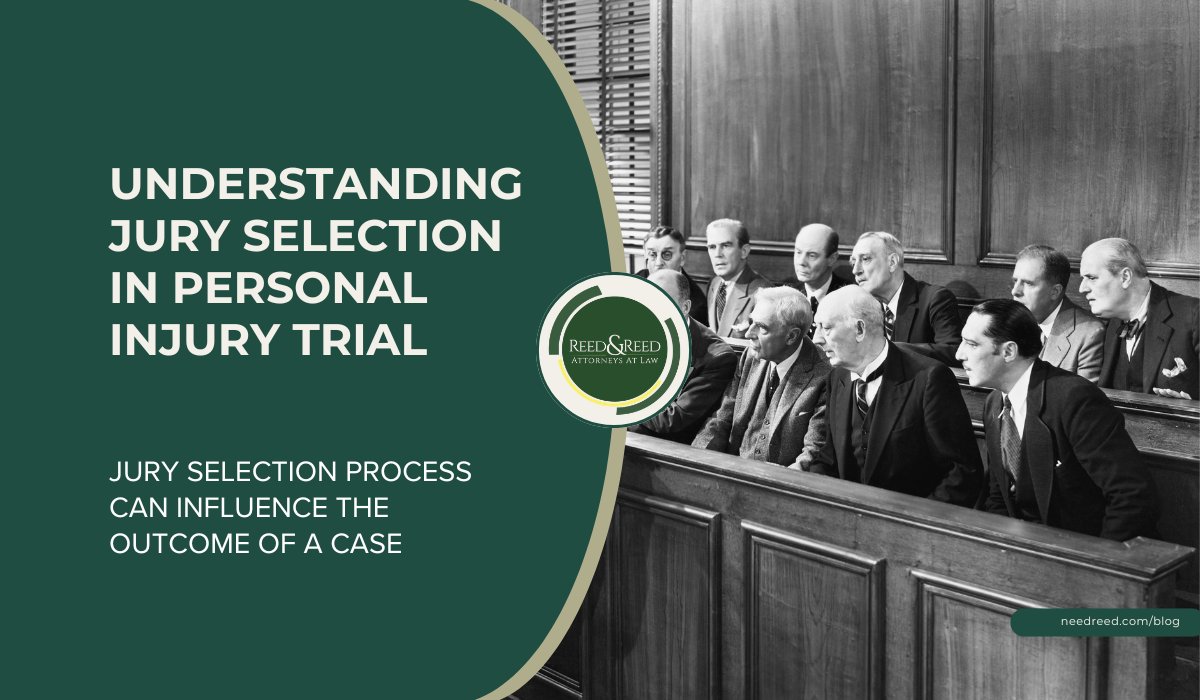
In legal terminology, the jury selection process is referred to as “voir dire,” meaning “to speak the truth” in French. In a civil personal injury case, voir dire typically begins with 20–30 citizens randomly summoned by the Clerk of Courts as prospective jurors. The judge questions the prospective jurors to determine whether they can fairly and impartially decide the case based solely on the relevant law and the evidence presented in court. In a personal injury case, the judge might ask about prior involvement in similar cases or close relationships with people employed in the insurance or legal industries. The purpose of the questions is to weed out potential jurors who are already biased toward one party or the other.
Every juror brings their own personal experiences into the courtroom, and those experiences will inevitably influence how evidence and testimony are perceived throughout the trial. While it is impossible to sit a jury full of people without any preconceived notions, the goal of questioning prospective jurors is to identify individuals whose experiences have created biases so significant that they cannot fairly and justly decide the case.
Challenges for Cause
During voir dire, two types of “challenges” can be used to remove a prospective juror. Once all challenges have been used, the remaining six individuals become the jury that will decide the case.
The first type of challenge is a challenge “for cause.” A challenge for cause asks the judge to excuse a juror because there is a legitimate legal reason why the individual cannot serve impartially. A challenge for cause is typically made when a prospective juror:
- Admits that he/she cannot be impartial.
- Has a close relationship with a party or an attorney involved in the case.
- Has a financial interest in the case.
- Demonstrated clear bias during questioning.
There is no limit to the number of prospective jurors that can be excused for cause; however, the judge ultimately determines whether sufficient grounds exist to excuse the juror.
Peremptory Strikes
Both sides are also allowed to use “peremptory” strikes to excuse prospective jurors during voir dire. For most personal injury cases, each side is limited to three peremptory strikes which may be used to excuse a potential juror for any non-discriminatory reason. Something as subtle as an individual’s body language during questioning might be used by an attorney to determine that the prospective juror would not be favorable to the client’s case.
Because an attorney does not (usually) need to explain why a juror is being removed when using a peremptory strike, these challenges can be strategically employed and may directly impact the outcome of the case. The only restraint to the use of a peremptory strike is that it cannot be based on discriminatory criteria, meaning it cannot be made because of the individual’s race, ethnicity, or gender.
What Is a Neil Inquiry?
Referencing the Florida Supreme Court case that set the standard, a “Neil” inquiry is used when one party believes the opposing side has removed a juror based on discriminatory factors, including race, ethnicity, or gender.
If a Neil inquiry is requested, the objecting party must identify the protected class allegedly involved and demonstrate that the circumstances raise an inference that the strike was exercised for discriminatory reasons. If the judge concludes that such an inference exists, the burden shifts to the attorney exercising the peremptory strike, who must then provide a non-discriminatory explanation for removing the juror.
The judge then determines whether the stated reason is credible or whether it merely serves as a pretext for unlawful discrimination. If the court concludes that the explanation is not genuine, the peremptory challenge will be denied, and the juror may remain on the panel.
Objecting to the Jury
Eventually, a jury of six individuals will remain on the panel, at which time the judge will ask both sides if they accept the jurors. If the outcome of a challenge for cause or a Neil inquiry did not go your way, your attorney should formally object to the final jury panel to preserve the record for appeal. Although the trial will likely proceed with the jury panel despite your attorney’s objection, the objection preserves important appeal rights. If the attorney accepts the jury as is, however, your ability to appeal an unfavorable jury verdict based on decisions made during voir dire is effectively waived.
Do You Have Jury Selection Questions?
If you have additional questions about the jury selection process in the State of Florida, or you were injured in a personal injury accident, schedule a free initial consultation with Reed & Reed.